Overview
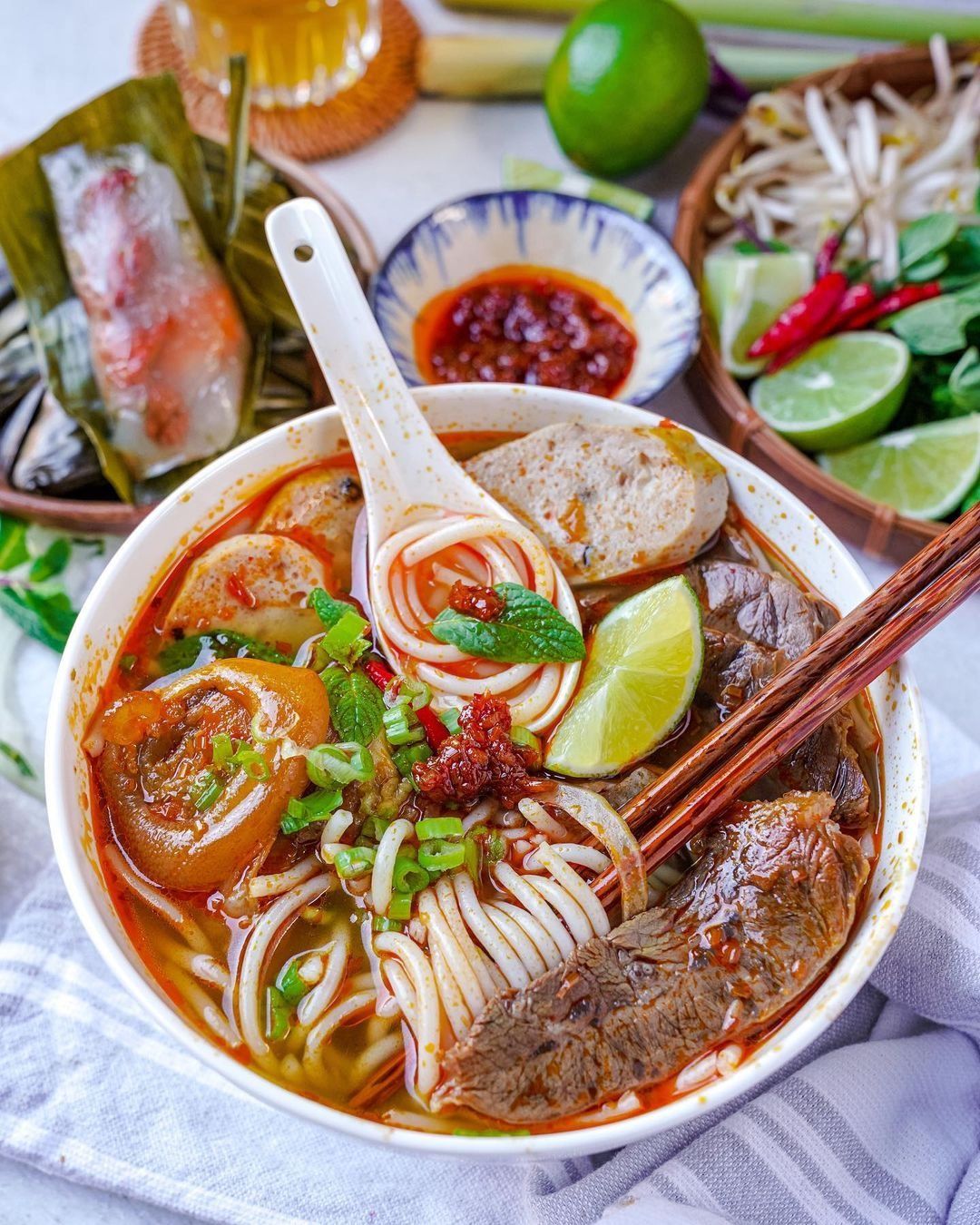
No discussion of Hue's cuisine would be complete without Bun Bo Hue. This dish has long since crossed the borders of the former imperial capital to become one of Vietnam's most famous exports, appearing on nearly every list of must-try Vietnamese foods worldwide.
What gives Bun Bo Hue its soul is the broth, simmered for hours from beef and pork bones together with crushed lemongrass and Hue's distinctive fermented shrimp paste (mam ruoc), producing a delicate sweetness layered with a bold, spicy warmth that no other region quite replicates.
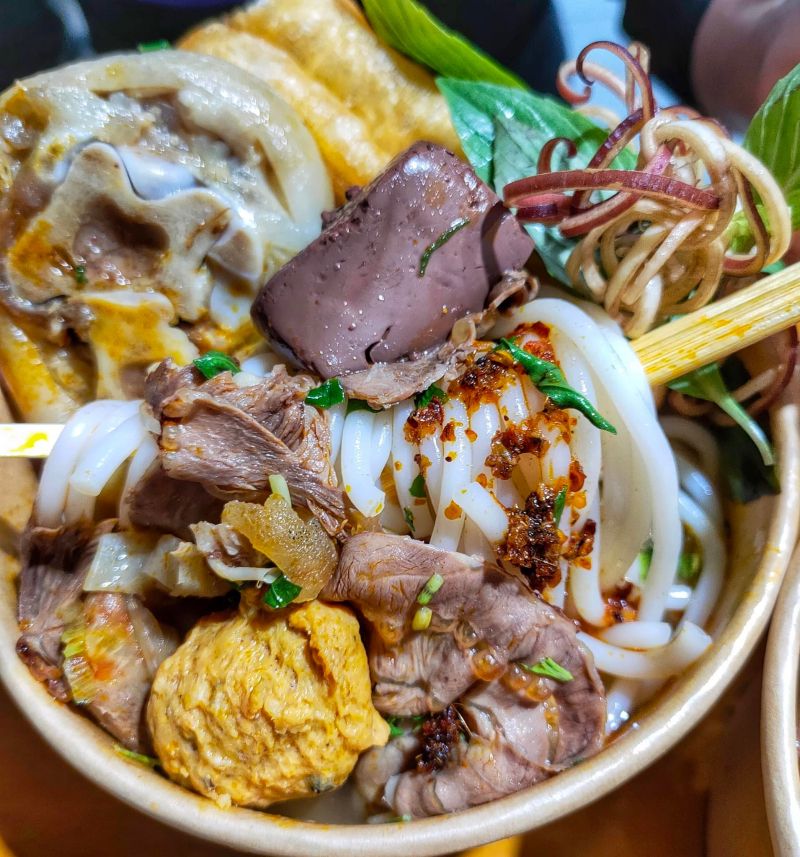
A proper bowl features thick, round rice noodles, sliced beef shank, tender stewed pork knuckle, crab cake or pork pate, a touch of blood pudding, scallions, and Vietnamese coriander. Diners then add fresh herbs, bean sprouts, shredded banana blossom, a spoonful of shrimp paste, and chili oil to round out the flavor to true Hue standard.
Interestingly, while every bowl shares the same name, each restaurant — and each Hue family — has its own secret seasoning touch, so the dish is always familiar yet subtly different. That's exactly why many visitors like to try a few different spots to compare and find their favorite version.
Where to Eat, Prices & Tips
Bun Bo Hue is a beloved breakfast dish for locals, so most of the best spots open early, around 6:00 AM, and can sell out quickly if business is brisk — so it's best enjoyed in the morning rather than saved for later in the day.
As for pricing, a bowl at a casual local eatery typically costs between 25,000 and 45,000 VND, while restaurants aimed more at tourists or serving extra toppings may charge a bit more. It's a very reasonable price given how filling and flavorful the dish is.
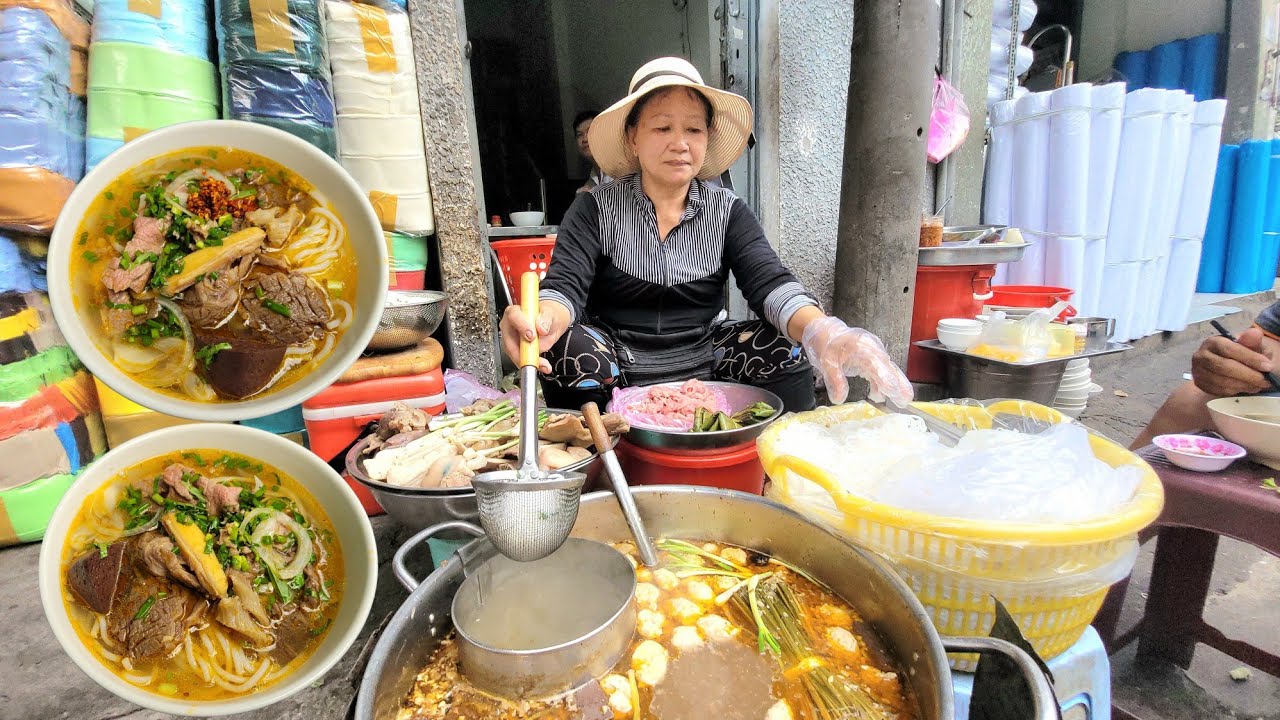
To find an authentic spot favored by locals, ask around or check with your hotel's front desk staff for recommendations — the best places are often tucked into small alleys rather than sitting on main streets.
A quick note for those sensitive to spice: Bun Bo Hue is famous for its signature chili oil kick, so when ordering, you can ask the vendor to go light on the spice or serve the chili on the side so you can adjust it to your own taste.
Pro Tips & Memorable Experiences
A helpful tip for enjoying Bun Bo Hue at its best is to eat it while still piping hot, with steam still rising from the bowl — that's when the sweetness of the simmered bones and the aroma of lemongrass and shrimp paste really shine. As it cools even slightly, the flavor noticeably fades.
Many seasoned diners recommend tasting a spoonful of the broth on its own before adding herbs or condiments, to appreciate the chef's original seasoning before customizing it further to your liking.
If you've had Bun Bo Hue elsewhere before, take the chance to compare it to the version served in Hue itself — you'll likely notice a clear difference in richness, the distinct aroma of shrimp paste, and a more refined use of seasoning.
After finishing your bowl, don't rush off — order a chilled glass of pennywort juice or sweet bean pudding at the same spot to cool down and complete the full street-food experience the way many locals and repeat visitors love to do.

Handy tips
- ✔Eat it piping hot — the flavor fades as it cools.
- ✔Taste the broth on its own before adding condiments.
- ✔Go early — the best spots sell out by mid-morning.